Solar Panel Wiring: Series vs Parallel vs Series-Parallel Explained
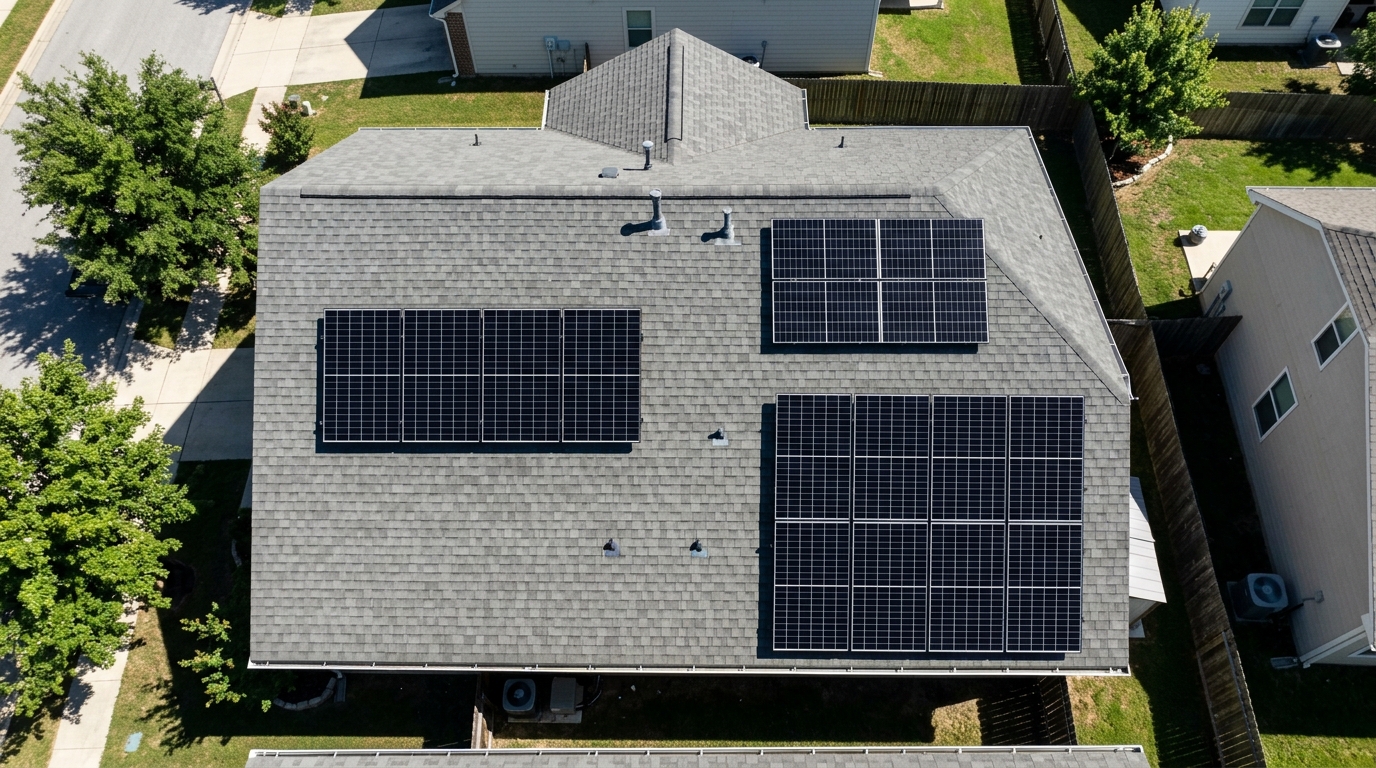
Short answer: Wire panels in series when you need higher voltage for your MPPT charge controller and shade isn’t an issue. Wire in parallel when shade is a problem or you’re using a PWM controller. Use series-parallel for larger arrays to balance voltage, current, and shade tolerance. The right choice depends on your charge controller, panel specs, and site conditions.
Why Wiring Configuration Matters
How you wire your solar panels together determines two things that affect everything downstream: the voltage and current your array produces. Get this wrong and your charge controller won’t operate efficiently — or won’t work at all.
A common beginner mistake: wiring a 4-panel array all in series because “more voltage is better.” But if one panel catches shade from a vent pipe for a couple hours every afternoon, it tanks the output of the entire string. Rewiring to a series-parallel configuration fixes it. If you’ve noticed unexplained production drops, our troubleshooting guide for low solar output covers how to diagnose shading and other common issues. There’s no universal “best” wiring layout — it depends on your specific situation.
The Basics: Voltage and Current
Before we get into configurations, you need to understand two numbers on every solar panel’s spec sheet:
- Vmp (Voltage at Maximum Power): The voltage the panel produces at peak output. Typically 30-45V for a residential panel.
- Imp (Current at Maximum Power): The current at peak output. Typically 9-13A for a standard panel.
There are also two “open” specs:
- Voc (Open Circuit Voltage): The maximum voltage with nothing connected. Always higher than Vmp. This matters because your charge controller must handle this voltage without damage.
- Isc (Short Circuit Current): The maximum current the panel can produce. Always higher than Imp.
Let’s use a concrete example throughout this guide. Say you have four 400W panels, each rated:
- Vmp: 37V
- Imp: 10.8A
- Voc: 44.6V
- Isc: 11.4A
Series Wiring
Series adds voltage, current stays the same.
When you wire panels in series, you connect the positive terminal of one panel to the negative terminal of the next, creating a daisy chain. The array’s total voltage is the sum of all panels’ voltages. The current remains the same as a single panel.
Four 400W Panels in Series
| Spec | Single Panel | 4 in Series |
|---|---|---|
| Vmp | 37V | 148V |
| Imp | 10.8A | 10.8A |
| Voc | 44.6V | 178.4V |
| Power | 400W | 1,600W |
When to use series:
- Your MPPT charge controller has a high enough voltage input rating (check the Voc at coldest expected temperature — voltage increases in cold)
- Your panels get consistent, unobstructed sunlight
- You want to minimize wire size (lower current = thinner wires for the same power)
- You’re running long wire distances from panels to controller (higher voltage means less percentage loss)
When to avoid series:
- Any panel in the string gets shaded, even partially. In a series string, the weakest panel drags down the entire string.
- Your charge controller’s maximum input voltage is below the array’s cold-weather Voc
The Shade Problem with Series
This is the single most important thing to understand. In a series string, current is limited by the lowest-performing panel. If one panel is 50% shaded, the entire string drops to roughly 50% output — not 75% as you might expect from losing one quarter of a panel.
Each panel has bypass diodes (usually three per panel) that help mitigate complete shading of individual cell groups. But partial shade still hammers series string performance.
In testing, deliberately covering half of one panel in a four-panel series string drops total output from roughly 1,450W to about 680W. That’s a 53% drop from shading just 12.5% of the total panel area.
Parallel Wiring
Parallel adds current, voltage stays the same.
In parallel, you connect all positive terminals together and all negative terminals together. The array’s total current is the sum of all panels’ currents. Voltage remains the same as a single panel.
Four 400W Panels in Parallel
| Spec | Single Panel | 4 in Parallel |
|---|---|---|
| Vmp | 37V | 37V |
| Imp | 10.8A | 43.2A |
| Voc | 44.6V | 44.6V |
| Power | 400W | 1,600W |
When to use parallel:
- Partial shading is common on your panels
- You’re using a PWM charge controller (these need array voltage close to battery voltage)
- You want shade resilience — each panel operates independently
When to avoid parallel:
- High current means you need thicker, more expensive wire
- Long wire runs (the percentage voltage drop increases relative to the lower operating voltage)
- Your charge controller’s maximum input current is a concern
Shade Performance in Parallel
Here’s where parallel shines. If one panel in a four-panel parallel array is 50% shaded, that panel’s output drops, but the other three panels keep producing at full power. Instead of losing 53% of output like the series example, you lose roughly 12-15% total.
The same shade scenario (half of one panel covered) on a parallel array shows total output dropping from 1,450W to about 1,260W. That’s a 13% drop versus 53% — a massive difference.
Series-Parallel Wiring
The best of both worlds for larger arrays.
Series-parallel combines both approaches. You create “strings” of panels in series, then wire those strings in parallel with each other. This gives you a voltage boost from series connections while maintaining some shade tolerance from the parallel connection of strings.
Four Panels in 2S2P (Two Series Strings of Two, Wired in Parallel)
String 1: Panel A + Panel B in series = 74V at 10.8A String 2: Panel C + Panel D in series = 74V at 10.8A Both strings in parallel = 74V at 21.6A
| Spec | Single Panel | 2S2P |
|---|---|---|
| Vmp | 37V | 74V |
| Imp | 10.8A | 21.6A |
| Voc | 44.6V | 89.2V |
| Power | 400W | 1,600W |
When to use series-parallel:
- Arrays of 4+ panels
- Mixed shade conditions (some panels shaded, some not)
- When you need to hit a specific voltage window for your MPPT controller
- Balancing wire cost (moderate current) with voltage drop (moderate voltage)
Smart String Layout for Shade
Here’s a practical tip: when designing a series-parallel array, put panels that share similar shade patterns in the same series string, and keep fully sun-exposed panels in their own string.
For example, if panels on one side of your roof catch morning shade from a tree, wire those in a series string together and the unshaded panels in their own string. The shaded string underperforms in the morning, but the unshaded string keeps producing at full capacity. If you mix shaded and unshaded panels in each string, both strings suffer.
How Configuration Affects Charge Controller Choice
Your wiring configuration must match your charge controller’s input specifications. Getting this wrong can destroy the controller or just waste money on a system that never hits full power.
MPPT Controllers
MPPT (Maximum Power Point Tracking) controllers accept a wide range of input voltages and convert them efficiently to your battery charging voltage. They are the right choice for 95% of DIY solar setups.
Key specs to check:
- Maximum input voltage (Voc): Your array’s Voc at the coldest expected temperature must be below this. Voltage increases about 0.27-0.35% per degree C below 25°C (STC) for monocrystalline panels. On a 20°F (-7°C) morning, a 178V Voc array could spike to ~198V. If your controller is rated for 150V, you’ve just killed it.
- Maximum input current (Isc): Your array’s total Isc must be below this.
- Maximum power rating: The controller can only process so many watts regardless of voltage/current combo.
Popular MPPT controllers and their input limits:
| Controller | Max Voc | Max Power (48V) |
|---|---|---|
| Victron SmartSolar 150/35 | 150V | 1,680W |
| Victron SmartSolar 250/60 | 250V | 2,880W |
| EG4 6000XP (built-in) | 500V | 6,500W |
| EPEver Tracer 4210AN | 100V | 520W (12V) |
Use our Solar System Sizer to match panels, configuration, and controller.
PWM Controllers
PWM (Pulse Width Modulation) controllers are simpler and cheaper, but they essentially just connect the panels directly to the battery with on-off switching. This means your panel voltage needs to be close to your battery voltage — typically 18-22V panel Vmp for a 12V battery system.
With PWM, you almost always want panels in parallel (to keep voltage at one-panel level while increasing current). Series wiring with PWM makes the excess voltage pure waste — a 148V array charging a 12V battery through a PWM controller would waste about 90% of the potential power as heat.
Bottom line: If you’re using PWM, wire in parallel. If you’re using MPPT (and you should be), you have flexibility to wire in series, parallel, or series-parallel depending on your site conditions. The same series/parallel principles apply when designing your battery bank — use the Battery Bank Calculator to figure out the right configuration for your storage needs.
Real-World Voltage Math: An Example
Let me walk through a complete example. Say you’re building a system with:
- 6x 400W panels (same specs as above: 37V Vmp, 44.6V Voc, 10.8A Imp)
- 48V battery bank
- Victron SmartSolar 250/60 MPPT controller (250V max Voc, 60A max input)
Option A: All 6 in Series (6S)
- Voc: 6 × 44.6V = 267.6V — Exceeds the 250V controller limit. Not usable.
Option B: All 6 in Parallel (6P)
- Voc: 44.6V
- Isc: 6 × 11.4A = 68.4A — Exceeds 60A controller limit. Not usable.
Option C: Three Strings of Two (3S2P… wait, 2S3P)
Two panels per string in series, three strings in parallel:
- Voc: 2 × 44.6V = 89.2V — Under 250V limit. Good.
- Isc: 3 × 11.4A = 34.2A — Under 60A limit. Good.
- Power: 2,400W — Under controller’s ~2,880W rating. Good.
Option D: Two Strings of Three (3S2P)
Three panels per string in series, two strings in parallel:
- Voc: 3 × 44.6V = 133.8V — Under 250V limit. Good.
- Isc: 2 × 11.4A = 22.8A — Under 60A limit. Good.
- Power: 2,400W — Good.
Both C and D work electrically. But D gives you higher voltage and lower current, which means:
- Less voltage drop over long wire runs
- Thinner wire between the array and controller
- Slightly better MPPT tracking efficiency (MPPT controllers tend to be more efficient with higher input voltage)
Option D (3S2P) is the configuration I’d recommend here. The higher voltage means you can use 10 AWG wire for a 60-foot run from roof to charge controller — with option C, you’d need 6 AWG. Check what you’d need with the Wire Gauge Calculator.
Cold Weather Voltage Correction
This catches people off guard. Solar panel voltage increases when the temperature drops. At -10°C (14°F), your panels might produce 10-15% more voltage than the spec sheet’s 25°C rating.
The temperature coefficient for Voc is listed on the panel datasheet, usually around -0.27% per °C for monocrystalline panels. Since it’s negative, voltage goes UP as temperature goes DOWN (below the 25°C reference).
Example: 133.8V Voc at 25°C, with a -0.27%/°C coefficient, at -10°C (35°C below STC):
133.8V × (1 + 0.0027 × 35) = 133.8V × 1.0945 = 146.4V
If your controller is rated for 150V max, you’re cutting it dangerously close. Always calculate Voc at the coldest temperature your location sees, then add a safety margin.
Wiring Best Practices
A few practical points from having done this several times:
Use Proper Solar Connectors
MC4 connectors are the standard. Don’t splice bare wires together and wrap them in electrical tape on your roof. MC4 connectors are weatherproof, UV-resistant, and lock together to prevent accidental disconnection.
For parallel connections, use MC4 branch connectors (Y-connectors) rather than cramming multiple wires into one connector.
Wire Sizing
Undersized wire wastes energy as heat and is a fire risk. Oversized wire wastes money. Size your wire based on:
- Maximum current (Isc of the array, not Imp)
- One-way wire distance from panels to charge controller
- Acceptable voltage drop (keep it under 3%, ideally under 2%)
The Wire Gauge Calculator accounts for all of these.
Grounding
Ground your panel frames and mounting rails to an equipment grounding conductor per NEC Article 690.43. This protects against lightning-induced surges and fault conditions. One continuous copper ground wire daisy-chained through all frame ground lugs, run to your main ground rod.
Disconnect Switches
Install a DC disconnect switch between the array and the charge controller. This lets you shut down the array for maintenance without waiting for dark. Working on live solar panels during daylight is extremely dangerous — they can’t be “turned off” as long as light hits them.
Common Mistakes
-
Exceeding controller voltage limits. Calculate Voc at your coldest temperature, not at STC. I’ve seen controllers blow up on the first cold, sunny morning.
-
Mixing panel models in a series string. Panels in series should be identical — same model, same age ideally. Different Imp ratings in a series string means the lowest-current panel limits the whole string.
-
Ignoring wire distance. A 100-foot run at 37V and 43A (parallel config) can lose 8-10% of your power to resistance, depending on wire gauge. That’s real money over the life of the system.
-
Using PWM with series wiring. PWM controllers waste all voltage above the battery level. Series-wired panels with a PWM controller is throwing away power.
-
Not accounting for shade. Walk your roof or ground-mount area at different times of day and different seasons before committing to a wiring plan. That tree shadow moves throughout the year.
Quick Decision Guide
All panels unshaded + MPPT controller: Wire in series (up to controller voltage limit). Maximize voltage, minimize wire costs.
Some panels get shade + MPPT controller: Series-parallel. Group shaded panels in the same string, unshaded in another.
Heavy shade on multiple panels + MPPT controller: Consider parallel, or use microinverters / panel-level optimizers instead of a string configuration.
PWM controller (any shade situation): Wire in parallel. PWM can’t use the extra voltage from series wiring.
Very long wire runs (50+ feet): Favor higher voltage (series) to reduce current and voltage drop.
Once you’ve settled on a wiring plan, you’ll want to make sure your wire runs are properly sized to avoid voltage drop and energy loss. Our solar wire gauge chart has full AWG tables for 12V, 24V, and 48V systems.
Size your whole system — panels, wiring, and batteries — with our Solar System Sizer or follow the solar panel sizing guide for a worked example. For off-grid builds, the off-grid solar system sizing guide covers worst-month sizing. It accounts for your location’s sun hours, temperature ranges, and energy usage to recommend the right setup. And don’t forget that your entire DIY installation — panels, wiring, batteries, and mounting hardware — likely qualifies for the 30% federal solar tax credit.
Frequently Asked Questions
Should I wire solar panels in series or parallel?
Wire in series if your panels get consistent sun and you want to minimize wire costs with higher voltage. Wire in parallel if shade is a concern — each panel operates independently, so one shaded panel won't drag down the rest. Most larger arrays use series-parallel for the best balance.
What happens if one solar panel is shaded in a series string?
In a series string, the shaded panel limits the entire string's current. Shading just 12.5% of total panel area can cause a 50%+ drop in output. This is because current through a series string is limited by the weakest panel.
Can I mix different solar panels in series?
Panels in a series string should be identical — same model and ideally same age. Different Imp (current) ratings mean the lowest-current panel limits the whole string, wasting the capacity of the higher-rated panels.
How many solar panels can I wire in series?
The limit depends on your charge controller's maximum input voltage. Add up each panel's Voc, then multiply by 1.15 to account for cold-weather voltage rise. That total must stay below your controller's maximum. For example, a 150V controller can typically handle 3 standard panels in series.
What is series-parallel wiring for solar panels?
Series-parallel combines both methods: you create strings of panels in series (to boost voltage), then wire those strings in parallel (to add current and shade tolerance). A common configuration is 2S2P — two series pairs wired in parallel.
Anthony
Solar homeowner, EV driver, and DIY builder. Using solar to power a large part of my home.
Get build guides in your inbox
Weekly solar builds, product tests, and technical deep-dives.
Subscribe Free